Signs Your Home Needs Roof Repairs Before the Next Storm Season in Wellington
Homeowners can spot roof damage early and avoid costly repairs by learning to recognise the warning signs before storm season arrives. Roof repairs in Wellington are especially important given the region's notorious winds, heavy rain, and exposed hill-site properties that face the full brunt of Cook Strait weather systems.
Eight Warning Signs Your Roof Needs Attention
Cracked or Missing Tiles
Concrete and terracotta tiles can crack over time, particularly on Wellington's exposed ridgelines where wind uplift places constant stress on the roof surface. Even a single missing tile can allow water ingress during heavy rain.
Damaged or Lifted Flashing
Flashing seals the joints around chimneys, skylights, and roof edges. When it lifts, rusts, or pulls away, water finds a direct path into your ceiling cavity. Hill-site homes in Karori, Hataitai, and Northland are particularly exposed to wind-driven rain that exploits these weak points.
Moss and Lichen Buildup
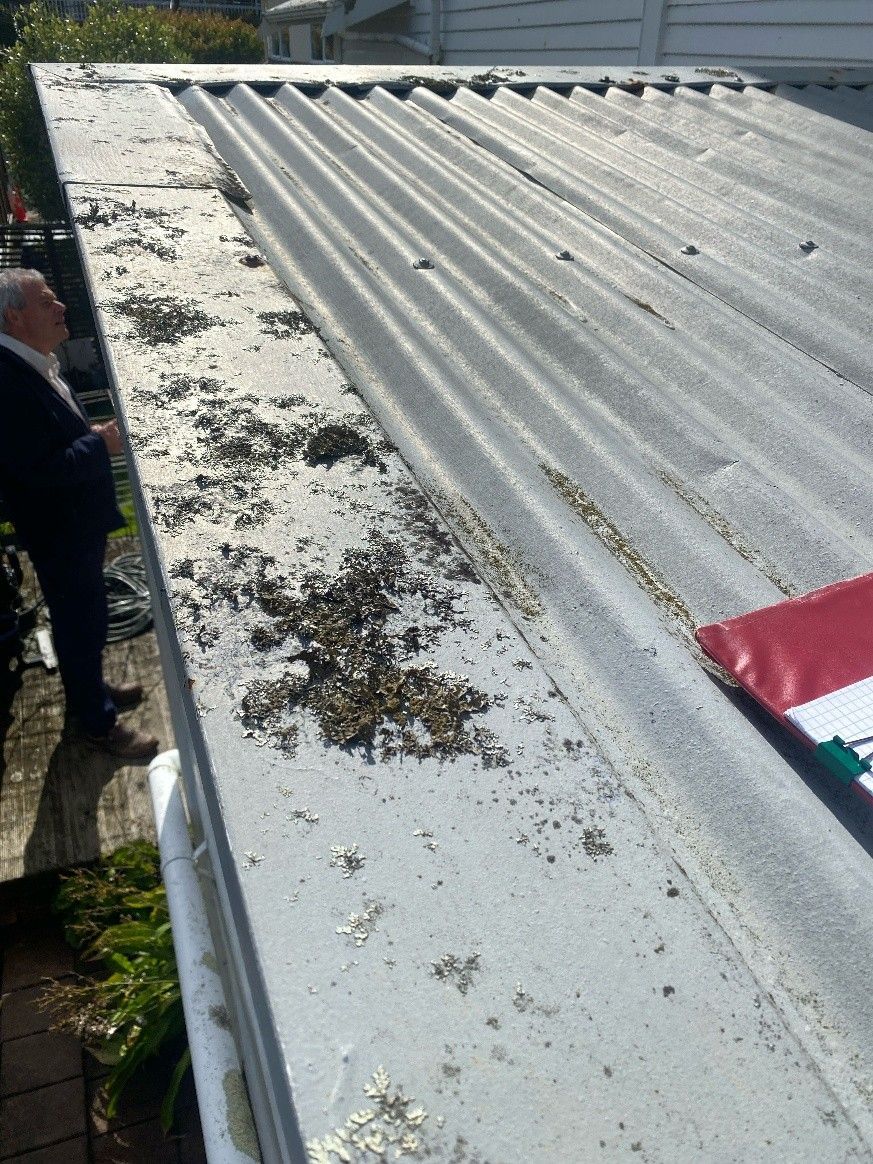
Wellington's wet winters create ideal conditions for moss and lichen to establish on tile and iron roofs. Moss retains moisture against the roof surface, accelerating decay. Homes surrounded by mature trees in suburbs like Kelburn or Ngaio accumulate debris and moss faster than open-site properties.
Rust or Corrosion on Iron Roofs
Iron roofs can develop rust when their protective coating breaks down. Salt-laden air from the harbour may accelerate this process for homes in coastal areas around Seatoun, Breaker Bay, and Miramar. Rust patches left untreated without roof repairs often lead to pinhole leaks that worsen quickly under storm pressure.
Sagging Roof Sections
A sagging or uneven roofline can indicate structural timber deterioration beneath the surface. If you notice a dip or bow in the roofline, book an inspection promptly rather than waiting for the next storm.
Blocked or Overflowing Gutters
Gutters clogged with leaf litter can force water back under the eaves, eventually causing interior damage. Properties near bush reserves and the town belt often see rapid gutter blockage between cleans.
Water Stains on Interior Ceilings
Brown or yellow staining on ceilings or upper walls is a reliable sign that water has already breached the roof. Even small stains may represent a larger leak tracking across the ceiling cavity.
Loose or Deteriorating Ridge Capping
Ridge caps sit at the peak of the roof and are among the most wind-exposed components. Cracked mortar or loose caps can shift during high-wind events and leave the roof structure exposed.
Can Roof Repairs Be Done in Wet Weather?
Minor repairs may be possible in light rain, but most professional roofers schedule work for dry conditions to ensure materials bond correctly and to manage safety risks on wet surfaces. Book an inspection now so repair work can be planned before the worst of storm season arrives.
How Quickly Should I Act After a Storm?
Acting within 24 to 48 hours of a storm event is advisable. Small entry points expand rapidly when exposed to continued rain and wind. A prompt inspection can determine whether emergency repairs are needed to prevent further interior damage.
Act Before the Next Storm Rolls In
For professional roof repairs serving Wellington, contact the team today or visit the roof repair services page to learn what the inspection process involves. Kenray Roofing Ltd has been serving the greater Wellington region for over 60 years and can be reached on 0800 536 729 to arrange an assessment before conditions deteriorate.